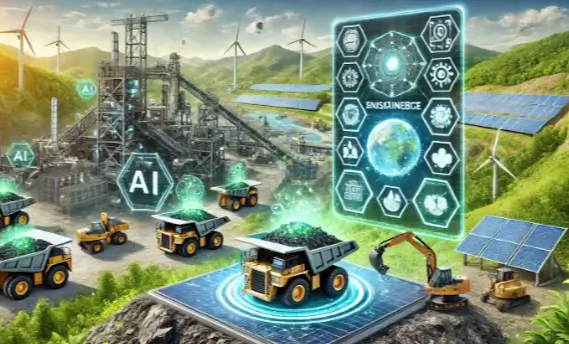

The mining sector will increasingly rely on integrated AI ecosystems that tie exploration, production, and post-processing into continuous, data-driven workflows. Advanced analytics, autonomy, and real-time monitoring aim to improve safety, efficiency, and resilience while reducing environmental impact. Governance, ethics, data sovereignty, and clear metrics will shape trust and accountability across operators, providers, and regulators. As these elements mature, decision-making becomes more adaptive—and the next challenge emerges, inviting a closer look at implementation, risk, and value realization.
What AI Can Already Do for Mining Today
AI already influences mining operations across multiple stages, delivering measurable gains in safety, efficiency, and productivity. Existing deployments optimize planning, autonomous drills, and remote monitoring through real-time analytics and predictive maintenance.
Constraints include AI limitations and data sovereignty concerns, shaping governance and reliability expectations. The industry pursues transparent data practices while balancing freedom with accountability, guiding scalable adoption: data governance, ethics compliance.
How AI Transforms Exploration, Production, and Safety
Exploration, production, and safety in mining are being reshaped by data-driven AI applications that enhance decision-making, optimize resource discovery, and reduce risk.
AI guides exploration targeting, automates data integration, and improves plant efficiency while monitoring safety protocols.
Data governance structures ensure quality, traceability, and compliance.
Ethics integration accompanies deployment, balancing innovation with accountability and transparent risk assessment across operations.
See also: How Governments Are Responding to Artificial Intelligence
Overcoming Barriers: Data, Ethics, and Human Collaboration
Addressing barriers in mining AI adoption requires a clear assessment of data quality, ethical considerations, and human collaboration dynamics to ensure reliable outcomes and sustainable value.
The approach emphasizes data governance and ethics alignment as foundational pillars, guiding transparent decision-making, risk management, and stakeholder trust.
Pragmatic deployment balances rigorous validation with scalable collaboration, enabling responsible innovation and durable competitive advantage across autonomous operations and analytic platforms.
The Path to Resilient, Sustainable AI-Driven Mines
How can mines achieve enduring resilience and sustainability through AI-driven operations? The path combines robust risk governance with transparent model explainability, enabling proactive risk mitigation and accountable decisions. Data-driven architectures foster adaptive production planning, autonomous sensing, and maintenance orchestration. Strategic governance aligns stakeholders, metrics, and standards, ensuring scalable, resilient, and responsible deployment across cycles, regions, and commodity markets.
Frequently Asked Questions
How Will AI Affect Local Communities and Employment in Mining?
AI reshapes local communities via employment shifts, with automation reducing low-skill roles while creating higher-skill opportunities; data-driven planning shows targeted local mitigation and workforce transition programs essential for sustainable community impact.
What Are the Long-Term Economic Returns of AI Adoption?
Long-run economic returns from AI adoption depend on AI efficiency gains and rugged analytics, balancing local communities and employment with environmental impact and governance; human expertise yields new roles, while prudent investment enhances overall productivity and strategic resilience.
Can AI Guarantee Zero Environmental Impact in Mining?
No, AI cannot guarantee zero environmental impact in mining. It can reduce harm through ethical optimization and enhanced monitoring, yet trade-offs persist, underscoring unethical optimization risks and data sovereignty concerns in pragmatic, data-driven strategic planning for freedom-seeking stakeholders.
How Is AI Governance Enforced Across Multinational Operations?
AI governance is enforced through centralized frameworks, audits, and cross-border regulation, ensuring multinational compliance, AI ethics, and transparent reporting; governance structures are pragmatic, data-driven, and strategic, balancing operational freedom with auditable safeguards across jurisdictions.
Will AI Reduce Need for Human Expertise or Create New Roles?
AI will not simply replace expertise; it redefines roles, expands the AI workforce, and drives skill redefinition. Organizations must measure impacts, invest in training, and balance automation with human judgment to sustain strategic freedom and operational resilience.
Conclusion
The article concludes that AI’s trajectory in mining hinges on robust data ecosystems, transparent governance, and human–machine collaboration. By integrating real-time analytics, autonomous systems, and ethical safeguards, operations become more resilient, safer, and efficient. Yet success rests on standardized data practices and cross-sector partnerships that align incentives and metrics. In this evolving landscape, AI is a compass and a co-pilot—guiding strategic decisions while steadily earning trust from regulators, communities, and stakeholders alike.